The Future of No-Code and Low-Code Website Builders
Category: Web Development
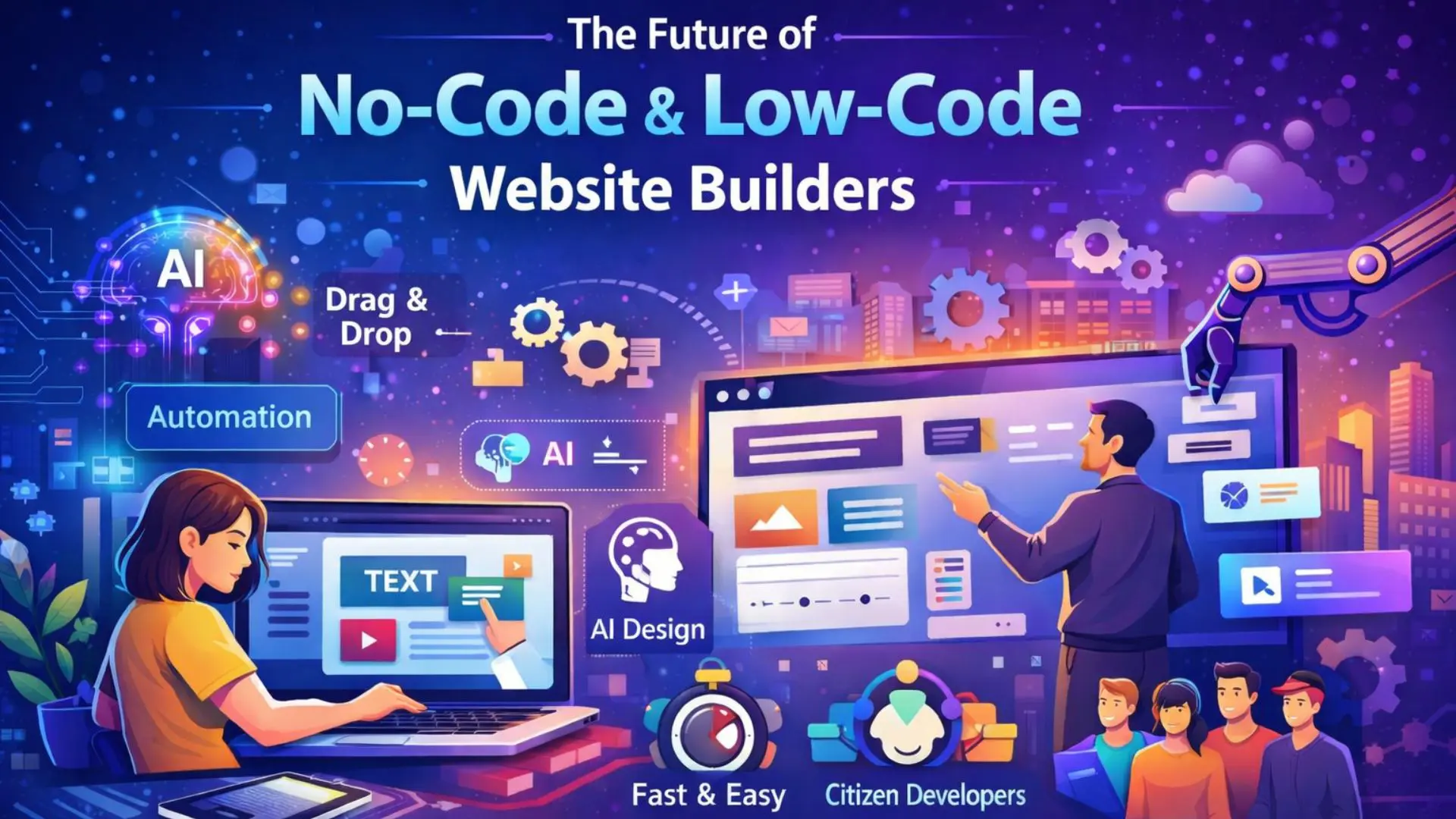
The way websites and applications are created is changing rapidly. In the past, building a website required strong programming knowledge and experienced developers. Today, no-code and low-code platforms are making website creation easier, faster, and more accessible for everyone.
These platforms allow users to build websites and applications using visual interfaces, drag-and-drop tools, and minimal coding. As technology continues to evolve, no-code and low-code tools are shaping the future of web development.
What Are No-Code and Low-Code Website Builders?
No-code and low-code platforms are development tools designed to simplify the website creation process.
No-code platforms allow users to build websites without writing any code. They use visual editors, templates, and drag-and-drop elements.
Low-code platforms still require some coding but significantly reduce the amount needed, helping developers build applications faster.
These tools make it possible for business owners, designers, and marketers to create websites without relying entirely on developers.
Rapid Growth of No-Code Development
The demand for no-code and low-code platforms has grown rapidly in recent years. The global market for these tools reached $29.4 billion in 2025, with businesses increasingly adopting them to build websites and digital products faster.
Experts also predict that low-code platforms could power up to 75% of new applications by 2026, showing how important these technologies are becoming in modern development.
This rapid growth is driven by several factors, including the shortage of skilled developers and the increasing demand for digital solutions.
Key Trends Shaping the Future
1. AI-Powered Website Builders
Artificial intelligence is becoming a major part of no-code platforms. AI tools can now generate layouts, write content, and design complete websites automatically.
Recent innovations even allow users to create websites simply by describing their ideas in natural language.
Many modern website builders are already integrating AI to simplify design and improve performance.
2. Rise of Citizen Developers
One of the biggest trends is the rise of citizen developers—people who create applications without formal programming skills.
Studies suggest that citizen developers may soon outnumber professional developers by four to one, showing how accessible these tools are becoming.
This shift allows businesses to build digital solutions internally without relying entirely on IT teams.
3. Faster Development and Lower Costs
No-code and low-code platforms significantly reduce development time and cost.
Businesses can build applications up to 90% faster using these tools compared to traditional development methods.
For startups and small businesses, this speed and affordability make it easier to launch products and test ideas quickly.
4. Integration with Advanced Technologies
Modern no-code platforms are integrating with technologies like:
- Artificial Intelligence (AI)
- Machine Learning
- Internet of Things (IoT)
- Cloud services
These integrations allow users to build more advanced websites and applications without writing complex code.
5. Industry-Specific Solutions
Another growing trend is the development of industry-specific no-code platforms. These tools provide templates and features designed for industries such as healthcare, finance, e-commerce, and education.
Industry-focused solutions help businesses build customized applications faster.
Benefits of No-Code Website Builders
No-code platforms offer several advantages:
Faster website development
Users can create websites within hours instead of weeks.
Lower development costs
Businesses can reduce expenses by minimizing the need for large development teams.
Easy customization
Drag-and-drop builders make it simple to update layouts, colors, and content.
Better accessibility
Non-technical users can build websites without coding knowledge.
Challenges and Limitations
Despite their advantages, no-code platforms also have some limitations.
Limited customization
Complex features may require traditional coding.
Scalability issues
Large applications sometimes need custom development.
Platform dependency
Users may depend on the tools and ecosystem of a specific platform.
Because of these limitations, many businesses use a hybrid approach—combining no-code tools with custom development.
The Future of Web Development
No-code and low-code platforms are not replacing developers but changing how development works. Developers can focus on complex tasks while businesses use visual tools for faster production.
As AI, automation, and cloud technology continue to improve, these platforms will become even more powerful.
In the future, building websites may become as simple as describing an idea and letting AI generate the design automatically.
Conclusion:
No-code and low-code website builders are transforming the digital world by making website development faster, easier, and more accessible. With the integration of AI, automation, and advanced technologies, these platforms are expected to play a major role in the future of web development.
Businesses that adopt these tools can innovate faster, reduce costs, and stay competitive in the rapidly evolving digital landscape.