
How to Improve Divi Website Speed with Caching and Lazy Loading
Category: Divi | Optimization | Web Design | Wordpress
In this blog, we’ll break down what caching and lazy loading are, why they matter for your Divi site, and how to implement them effectively.
1. Enable Caching for Faster Page Load Times
Caching is one of the simplest yet most powerful ways to improve your Divi website’s speed. Instead of generating each page from scratch every time someone visits, caching creates and stores static versions of your pages. This means that when users revisit your site—or visit multiple pages—they experience significantly faster load times.
When caching is properly configured, your server does less work, your pages load quicker, and your visitors are more likely to stay on your site. It’s especially important for Divi sites, as Divi’s visual builder and advanced layouts can add extra loading time if not optimized.
Different Types of Caching You Should Use:
- Page Caching: Saves the entire HTML output of a page, so it loads instantly for future visitors.
- Browser Caching: Instructs users’ browsers to save static assets (like images, CSS, and JavaScript) locally.
- Object Caching: Caches database query results, reducing the time it takes to retrieve data from your WordPress database.
How to Set Up Caching on Your Divi Site:
1. Install a caching plugin such as:
- WP Rocket (premium but beginner-friendly)
- W3 Total Cache (free with advanced settings)
- LiteSpeed Cache (free, works best with LiteSpeed servers)
2. Configure essential settings like:
- Page caching
- Browser caching
- GZIP compression
- Minification of CSS and JS files
3. Purge your cache anytime you update content or make design changes in the Divi Builder to ensure visitors see the latest version.
2. Use Lazy Loading to Optimize Image and Video Loading
Lazy loading is a highly effective way to improve your Divi website’s speed by deferring the loading of non-critical media assets—like images and videos—until they are actually needed. Instead of loading every image and video on the page at once, lazy loading waits until the user scrolls near them. This greatly reduces the initial load time and the strain on your server.
For Divi websites, which often rely on rich visuals, animations, and background videos, lazy loading ensures that only what’s immediately visible gets loaded first—delivering a faster and smoother user experience.
Benefits of Lazy Loading:
- Reduces initial page load time by not loading all media assets upfront
- Saves bandwidth, especially for users on mobile or slow networks
- Improves SEO and Core Web Vitals, especially Largest Contentful Paint (LCP)
- Enhances overall site responsiveness, keeping users engaged
How to Set Up Lazy Loading on a Divi Site:
1. Use Native Lazy Loading (Built into WordPress 5.5+)
WordPress now automatically adds the loading=”lazy” attribute to image tags. Divi supports this feature by default, so most images will already be lazy-loaded.
2. Install a Lazy Load Plugin for More Control
Consider using plugins that enhance lazy loading options:
- a3 Lazy Load – free, beginner-friendly, and highly customizable
- Smush – includes both lazy load and image compression features
- Perfmatters – premium plugin offering advanced lazy loading for iframes, videos, and more
3. Optimize Image Sizes Before Uploading
Even with lazy loading, unnecessarily large image files can bog down your site. Use tools like:
- TinyPNG
- ImageOptim
- Divi’s built-in image size controls
4. Combine with Other Speed Optimization Techniques
Caching and lazy loading are powerful, but for optimal performance, consider combining them with:
- Minifying CSS and JS files
- Reducing HTTP requests
- Using a Content Delivery Network (CDN) like Cloudflare
- Hosting with a Divi-optimized provider (e.g., SiteGround, WP Engine)
5. Test Your Speed Improvements
Once you’ve applied caching and lazy loading, test your site speed using tools like:
Check for metrics like First Contentful Paint (FCP), Largest Contentful Paint (LCP), and Time to Interactive (TTI).
Faq
1. Will caching interfere with the Divi Builder?
2. Does lazy loading reduce image quality?
3. Should I still optimize images if I use lazy loading?
4. How do I test if lazy loading is working on my site?
Conclusion:
Speed optimization is essential for any WordPress site, and even more so for Divi-powered websites that rely on dynamic, media-rich content. By enabling caching and lazy loading, you can dramatically improve your site’s performance, lower bounce rates, and boost SEO rankings.
Search blogs
Other Blogs

Elementor Not Saving Changes? Step-by-Step Solution
When you are building a page in Elementor and suddenly your changes refuse to save, it can feel extremely frustrating. You click the Update button, the loader spins, and then either nothing happens or an error message appears. Sometimes it even looks like the page...
How to Fix “There Has Been a Critical Error on This Website” in WordPress
If you are running a WordPress website and suddenly see the message “There has been a critical error on this website”, don’t panic. This error looks serious, but in most cases, it can be fixed easily. This message appears when something on your website stops working...
Divi 5 Is Finally Here — A Deep Dive Into the New Interface, Speed, Features & What’s Changed
After years of development and community feedback, Divi 5 has officially launched. But this isn’t just another update to the popular Divi by Elegant Themes — it is a complete architectural transformation. If you’ve explored a Divi 5 demo, you’ll immediately notice how...

How to Fix reCAPTCHA Not Working in WordPress
reCAPTCHA is an essential security feature that protects WordPress websites from spam, bots, and fake form submissions. However, many site owners face issues where reCAPTCHA does not display, fails validation, or blocks legitimate users from submitting forms. If...
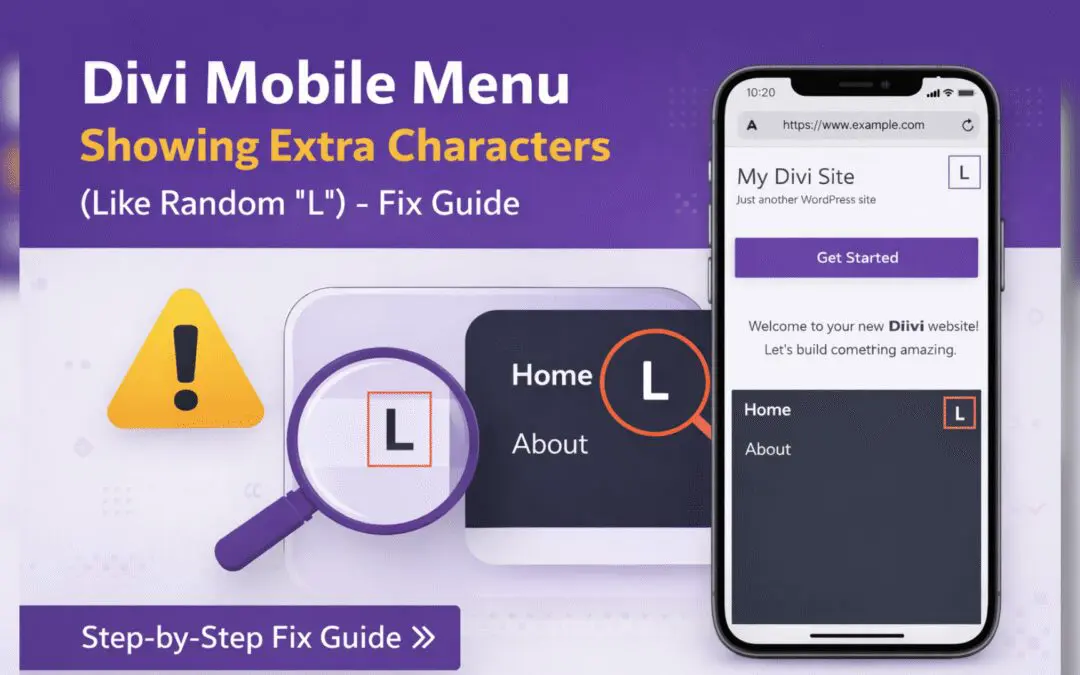
Divi Mobile Menu Showing Extra Characters or Symbols (Like Random “L”) – Fix Guide
If you are using the Divi theme on your WordPress website and notice extra characters or strange symbols (such as a random “L”, square boxes, or broken icons) appearing in the mobile menu, you are not alone. This is a common issue faced by many Divi users, especially...